News · Aotearoa
FENZ responding to vegetation fire on Walter Peak, smoke visible from Queenstown
6 October 2026 · 2 min read
News · Opinion · What's On
New Zealand’s LNG import plan has stalled. Richard Woodd examines what happened, the gentailers’ alternative and what comes next for Taranaki.
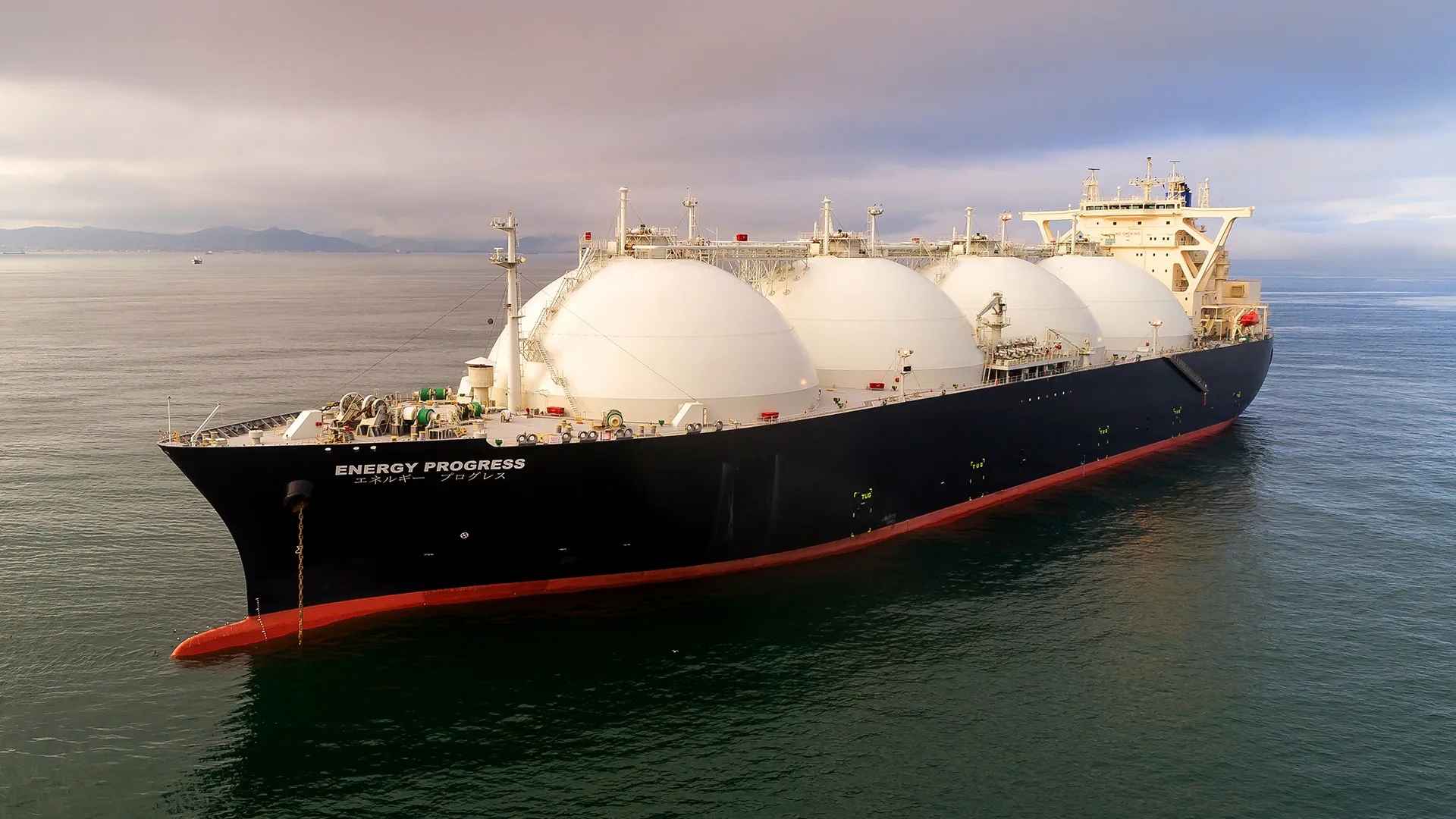
LNG imports in New Zealand have stalled. Energy correspondent Richard Woodd examines what happened, the alternatives now on the table and what comes next.
The Government’s $1-2 billion LNG import terminal plan is currently stalled, caught between a highly contested MBIE procurement process and a rival, last-minute alternative presented by major gentailers. Where it all goes from here will depend on who wins the election on November 7 and which coalition partners they end up with.
The National Cabinet deferred the LNG Taranaki import terminal in what was its third major policy U-turn in the final month of the Parliamentary term before the November 7 election. The other u-turns were: Luxon and Willis decided no support for a homestay bed tax; local government rationalisation abandoned, after setting a deadline to comply. Both of these switches left councils feeling very annoyed. Everybody and their dog is claiming to have played a pivotal role in the LNG decision: Political parties Labour, Greens and Opportunities; Climate Justice activists; Lawyers for Climate Action. They were all celebrating with ‘Yeehah, we did it, now let’s get rid of this government!’
NZ First leader & deputy PM Winston Peters said it was a unified coalition move; ACT leader David Seymour added it would be irresponsible to sign before the election. Labour leader Chris Hipkins vowed he would cancel any LNG contract signed by Energy Minister Simeon Brown before the election.
In fact it appears it may have been the result of a counter-attack by the four gentailers – Genesis, Meridian, Mercury and Contact — that really tossed a spanner in the National works. NZ Herald and Business Desk reported on September 24, that a late alternative proposal from gentailers had caused the Government to delay the project. Here’s my take on the background to this; it’s a complex subject, so read it carefully:
Richard Woodd examined the wider LNG debate in New Plymouth yesterday, including energy security, affordability and concerns about the proposed Port Taranaki terminal.
The Government shot itself in the foot by announcing it would impose a consumer levy on everyone’s energy bills to finance what was going to cost between $1 billion and $2.7 billion (but failed to provide much detail), and then changed its mind because Luxon didn’t want to be pilloried for introducing a big new tax that would inevitably inflate everyone’s power bills, especially as they are 51% shareholders in three of the companies. And he intended to shame the opposition parties for allegedly planning nine new taxes. The Government decided it would not pay for anything, would only take a co-ordinating and maybe under-writing role for LNG. Instead, the gentailers would have to pay for everything as they would be the major financial beneficiaries; the government even created regulations to control unjustifiable profiteering with fines up to $10 million. The gentailers were furious at everything being dumped on them, as they would be forced to ramp up power bills to extraordinary levels to recover costs and make a profit.
So they banded together and came up with an alternative team strategy that would use the following strategies: • Bypass the short-listed LNG design-build-operate terminal tenderers (understood to include Hoeg Evi of Norway, Hibiscus Petroleum of Malyasia or possibly Canadian-owned local gas specialists Clarus) and would potentially eliminate the need for LNG, or at very least minimise the import requirements to meet a dry year energy crisis • Maximise coal burning at the Genesis Huntly plant • Use hydro dam storage to its full limits • Build a new gas/diesel peaker at Huntly • Better balancing of industrial demand and supply • Strategically using the underground storage at Ahuroa (and another soon to be available at Tariki) • Make efficient use of existing and upcoming new gas production from the current wave of onshore drilling.
Hoeg Evi (formerly known as Höegh LNG) is a global leader in floating energy infrastructure, specializing in the ownership and operation of Floating Storage and Regasification Units (FSRUs) and LNG carriers. Hibiscus Petroleum operates development and production facilities in Brunei, Vietnam and Malaysia and announced last year it would be expanding into New Zealand. Clarus owns the Maui pipeline network and the Ahuroa underground storage structure, and built NZ’s $52m first biogas plant at Reporoa which supplies a Fonterra powder factory and horticulture growing houses. Clarus and Hoegh LNG were once business partners.
Ahuroa is our only dedicated underground gas storage facility, at Te Popo (east of Midhirst), owned by Flexgas, part of Clarus. It stores gas 2500 metres below ground, in a 15 metre thick seam of porous rock that previously held gas and oil. Withdrawn at the maximum rate, Ahuroa can provide enough gas to generate around 10 gigawatt-hours of electricity each day, equivalent to powering around half a million New Zealand households. Another underground structure at nearby Tariki, expected to be operational by year end, has storage capacity of 15 to 30 billion standard cubic feet, or up to 10 petajoules (PJ) of natural gas. It’s connected to the Waihapa production station 30 km away via existing pipeline networks. Tariki is a joint venture between the NZ Energy Corp and L&M Energy and will be used by Genesis to store gas during low demand periods and extract it when demand increases.
Resources Minister Shane Jones is trying to help increase short and long term gas exploration and production by offering financial incentives. He has committed $53.9 million in grants, loans and equity from the regional infrastructure and gas security funds to incentivise drilling:
1. Todd Energy $16.2m loan from the Gas Security Fund to drill and connect a new well at the McKee-Mangahewa gas field; second loan of up to $7.3m will help convert an existing McKee well to access gas in the deeper Tariki reservoir. Todd is putting in about $10.1m of its own money. Those two projects are expected to unlock up to 19.9 petajoules of additional gas reserves over five to nine years and, if successful, gas will be flowing by the end of 2027, Jones says.
2. $14.5 million grant from the Regional Infrastructure Fund to Schlumberger New Zealand to create the first basin-scale offshore pseudo 3D dataset using state-of-the-art seismic technology.
3. $21.5m for a time-limited equity arrangement for EnZed Energy’s Kaheru offshore exploration in Taranaki. The project has an estimated total cost of $71 million, with EnZed Energy raising the remaining $49.5m from other investors. It targets an estimated 182 petajoules of additional gas reserve in the Kaheru permit, equivalent to nearly 25 percent of New Zealand’s January 2026 proven and probable gas reserves. It covers 546 sq km of permit 61434 which is immediately adjoining the Kupe platform and is for a single well at this stage and as the permit area is mostly within the marine mammal sanctuary will be subject to EPA approvals. The estimated cost includes hiring an offshore rig; full development of any commercial discovery usually takes around 10 years.
Jones has also removed a royalty payment that was proving a barrier to cost-effective use of undergound gas storage. A royalty of 5% of the estimated value of what is called ‘cushion gas’ is no longer payable; this gas is used to help maintain pressure in underground structures and can’t be extracted or sold.
Jones announced that Adelaide-based EnZed Energy Pty Ltd has filed an application to explore the Toutouwai prospect 50 km off Cape Egmont. OMV and TotalEnergies EP Aotearoa drilled a 4300 m deep well there in 2020, found promising hydrocarbons but were unable to test due to Covid restrictions so it was plugged and abandoned. The Government on October 1 opened the 2400 sqkm permit to competitive bids. A commercial find there would be dependent on a long pipeline or moored FPSO, both costly.
Here’s the proof of the government’s proposed position in the LNG project, in a statement to me from MBIE’s energy division: • The Terminal Use Agreement will be a full-service contract, so the service provider will cover the costs of the FSU, gas pipeline connection, and wharf fees (which in turn will recover the costs of any upgrades made by the Port). The annual lease fee set out in the Terminal Use Agreement will be based on these costs. The Government won’t own the facility, so there are no capital costs for the Crown in relation to the facility. • The Government’s position is that the sector needs to be responsible for delivering dry year cover, not the Crown. MBIE is working through the detail of how the annual lease fee will be paid for, including engaging with gentailers on a fair funding model. • The funding model will also include a user pays element, which means other gas users will be able to pay to source gas from the facility. • LNG users will pay for the LNG supply, just like they pay for any other fuel to power electricity generation, or run their business. • The Government is taking on a co-ordination function to ensure New Zealand has an LNG import capability, as this is needed by many parties. However, no individual party is willing and able to take on this scale of project. The Government will not be signing a contract that places an undue amount of risk on the Crown. • Further details will be shared in due course.
The terminal location and community safety factors had nothing to do with the project pause. Eleven different locations were studied and then reduced to four, of which inside Port Taranaki was the preferred. The Government has been intensively studying LNG since 2023 when Enerlytica Ltd (owned by Wellington consultant John Kidd) was first commissioned by the Government via the Gas Industry Company to assess options and he painted this picture: “New Zealand is the only developed nation with an indigenous gas market that does not trade gas with another nation. This absence of external fungibility is also unique among primary energy fuels within New Zealand as existing infrastructure already enables the international trade of oil products, LPG, biofuels and coal. The result is an inability to balance what is a highly concentrated domestic gas market with external volumes during periods of domestic over- or under-supply. Since the Maui field entered decline in the early 2000s, the market has experienced several such periods of imbalance, including the most recent sequence of a significant supply shortfall since 2018. There is a gas supply gap of up to 65 PJ p.a. that could have been met by gas if it was available. There are indications this supply gap should narrow significantly in the next 2-3 years, however this is not certain. In addition, the magnitude of the gas supply gap in any one year is highly uncertain, with a large range of possible outcomes depending on hydrological cycles, electricity demand growth, Tiwai Point continuity, new renewable generation capacity additions and the impact of government policy on the future demand for generation gas.” Kidd identified four potential receiving sites at Marsden Point, Port Taranaki, South Taranaki Bight [Kupe platform] and as a tie-in to the Maui-A platform. “Of these options, Port Taranaki provides the best fit with existing infrastructure but faces significant uncertainty over consenting timeframes and outcomes. Marsden Point is an already-consented site that could be delivered rapidly but faces onshore bottlenecks that would constrain the utilisation and increase the cost of import infrastructure. South Taranaki Bight could be an inexpensive option that would also connect well with existing infrastructure. Maui-A would require bespoke FSRU and mooring modifications that would be expensive to implement.”
MBIE policy director Rebecca Heerdegen has confirmed in an OIA request that $8 million has been spent on procurement and related advisory costs from various consultants, most of whom contributed to the NZ LNG Import Feasibility Assessment Report. This was the result of an assessment led by UK-based Gas Strategies Group Ltd, with support from NZ-based Wood Beca Ltd, over 10-week period from mid-September 2024 to 20 December. The scope of the assessment was determined by a set of LNG demand scenarios and guiding principles provided by the Gas Industry Company and Clarus/First Gas, Contact Energy, Genesis Energy, Mercury NZ and Meridian Energy. Other professional services engaged included LNG design and operation specialists Worley Australia; Sydney law firm Herbert Smith Freehills Kramer; Auckland law firm Russell McVeagh.
A limited public release summary was issued from the feasibility report and among its key points were: • No single location in New Zealand has the existing combination of sufficient water depth, benign metocean condition and existing gas pipeline capacity to meet demand scenarios. Therefore, all locations will require financial investment to address one or more of these issues. • LNG imports are unlikely to be achieved in less than four years unless the existing permitting and consenting process is fast-tracked and / or some financial risk is taken to commit to long-lead items in advance of taking a final investment decision (FID) on the project. These measures could reduce the timeline by up to one year. Government support, including permitting and consents, will be a key enabler in achieving LNG imports in a reduced time frame. • LNG represents an insurance policy for New Zealand to ensure the availability of gas resources into the future. Over a 15-year duration, the annualised cost of the infrastructure to provide this certainty is in the region of NZ$170–210 million, this excludes the cost of the LNG. However LNG demand is uncertain and it is recognised that in some years demand could be zero. In this case, fixed infrastructure costs will still need to be recovered. • The cost of the LNG, based on an average price over last 12 months, would be NZ$83 million (US$51 million) per LNG cargo, however LNG prices have been particularly volatile in recent years. The number of cargoes required each year could vary between zero and three up to 2030, and perhaps up to seven cargoes per year post 2030.”
Port Taranaki had been counting on the LNG terminal for a much-needed boost to declining trade. Although management is not commenting, they will be disappointed at the deferment of a decision and the prospect of even worse from the November election result. The best I could get from their comms guy was: “No comment, there’s too much uncertainty.” Meanwhile, they’re preparing for a shipload early next year of four complete turbine towers, generators and 12x80m long blades from probably the Vestas factory in China, which will be stored at the port then transported by road to the Kapuni ammonia urea fertiliser plant for hydrogen developer Hiringa Energy. Hiringa is finishing foundation construction for the turbines to generate electricity for production of emission-free “green” hydrogen at Kapuni which will be used to make ammonia.
Port Taranaki will eventually be the main assembly and staging point for offshore wind farms. The first $5 billion farm in the STB, won’t get its government feasibility licence for another 5-7 years, says ocean engineer Oliver Mills who helped write the feasibility criteria for MBIE. That is likely to be the Taranaki Offshore Partnership, a joint venture between Copenhagen Infrastructure Partners and the NZ Super Fund. Then they have secure a final investment decision from Europe backers; order towers, engines and blades from northern hemisphere manufacturers; lay undersea cabling, build substations and grid connections; and install the 70-odd turbines over three summers using leased specialist vessels, so electricity is unlikely to flow for another 10 years.
Have a story tip or spotted an error? Contact the newsroom.
6 October 2026 · 2 min read
6 October 2026 · 3 min read
6 October 2026 · 3 min read