News · Waikato · Hamilton · Politics · Election 2026
Enrolments close as voting begins: New Zealand heads to the polls
26 October 2026 · 3 min read
The stories that matter to Waikato, for the Waikato.
Final-year Bachelor of Design students at the University of Waikato will showcase projects spanning websites, mobile design, branding, animation and interactive technology. The T@g Design Showcase 2026 runs on 28 and 29 October at S Block Gallery on the Hamilton campus.
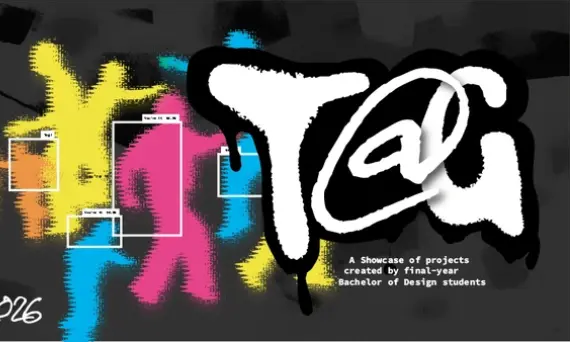
A two-day exhibition opening tomorrow, Wednesday 28 October, will provide a glimpse into the ideas, technologies and design approaches being explored by students at the University of Waikato.
The T@g Design Showcase 2026 will take place at the university’s S Block Gallery on its Hamilton campus.
The exhibition is scheduled to run on Wednesday and Thursday, 28 and 29 October, between 10am and 4pm.
Featuring capstone projects developed by final-year Bachelor of Design students, the showcase brings together work from disciplines including website development, mobile design, branding, animation, motion graphics and interactive technology.
For students, the exhibition represents an opportunity to present the results of sustained work on projects that require creative thinking, technical development and independent decision-making.
For visitors, it offers a chance to see how emerging designers are approaching the increasingly digital world.
More than a university assignment Final-year design projects occupy a distinctive place in tertiary education.
Rather than simply responding to a short classroom exercise, students are expected to plan and develop more substantial pieces of work.
These projects require them to demonstrate how they can take an idea from its initial concept through research, development and presentation.
At the University of Waikato, the final year of the Bachelor of Design programme provides an opportunity for students to undertake relatively independent projects.
The university says students are encouraged to work with their peers and engage with people from professional design industries and the academic community.
Advisors and mentors contribute throughout the process, helping students refine their ideas and work towards completed outcomes.
The resulting projects are now being prepared for public exhibition.
Although the university has identified the categories of work being displayed, the available exhibition announcement does not provide a complete catalogue of individual projects.
It would therefore be premature to identify particular inventions, products or companies as participating without further confirmation.
Design in an increasingly digital world The exhibition’s subject areas reflect how much the design profession has changed.
Design is often associated with visual work such as logos, posters, packaging and advertising material.
However, modern digital design extends far beyond creating something visually appealing.
Websites, mobile applications, interactive installations and digital communication systems all require decisions about how information is presented and how people interact with it.
A successful digital product must do more than look attractive.
Users need to understand where to click, how to find information and what to expect when they interact with the system.
Poorly designed interfaces can create frustration even when the technology behind them is sophisticated.
Conversely, a carefully structured interface can make a complicated process feel straightforward.
The University of Waikato’s exhibition includes projects across several of these interconnected disciplines.
Building websites that work for people Website design and production are among the fields represented at the showcase.
For many organisations, a website is now one of the most important ways they communicate with customers, clients or communities.
A visitor may form an impression of an organisation before speaking to a staff member or visiting a physical location.
That puts significant responsibility on those designing digital experiences.
Navigation, readability, mobile compatibility, loading performance and accessibility all influence whether users can accomplish what they need.
Designers must consider how a website works across different devices and screen sizes.
A page that appears effective on a large desktop monitor may behave differently on a mobile phone.
Information that is easy to locate with a mouse may be difficult to access through a touchscreen.
These considerations are particularly relevant as people increasingly use mobile devices to access services and information.
For students entering the profession, understanding such challenges can be just as important as developing visual creativity.
Mobile technology creates different challenges Mobile design is another area represented in the exhibition.
Designing for a phone or tablet introduces constraints that are not always present in traditional print or desktop work.
Screens are smaller, interactions are more immediate and users may be trying to complete a task while moving between locations.
The order in which information appears becomes especially important.
Buttons, menus, text and images need to be arranged so that people can navigate without unnecessary effort.
Designers also need to consider how different users interact with technology.
Some may have limited vision, reduced dexterity or other accessibility requirements.
Others may use devices with smaller screens or have less experience navigating unfamiliar applications.
An effective design should account for a broad range of users rather than assuming everyone interacts with technology in the same way.
These challenges demonstrate why mobile design involves more than shrinking a desktop website to fit another screen.
Animation and moving images Motion graphics and animation are also included among the types of work scheduled for display.
These disciplines combine visual storytelling with movement and timing.
Animation can be used for entertainment, educational material, digital advertising, explanatory videos and interactive applications.
Motion graphics frequently appear in news broadcasts, sporting coverage, public information campaigns and online media.
They can help audiences understand a process that might be difficult to explain through static text alone.
However, movement needs to serve a purpose.
Too much animation can distract from a message, while poorly timed visual transitions may make information harder to follow.
Students working in these fields must balance creativity with communication.
They also need to consider how their work will be viewed, whether on a cinema screen, a computer monitor or a mobile device.
The exhibition offers an opportunity to examine this broad area of contemporary design.
Why branding remains important Brand development is another component of the showcase.
Although branding is sometimes reduced to a company name or logo, it encompasses the broader identity through which an organisation communicates.
Typography, imagery, colours, messaging and visual consistency all contribute to how a brand is recognised.
For a business, strong branding can help audiences distinguish its products or services from competing offerings.
For a community organisation, it can establish a recognisable identity and make information easier to identify.
Consistency is important across different platforms.
An organisation’s printed materials, website, social media content and physical signage should ideally feel connected.
Designing that consistency requires a set of decisions that extends beyond creating one attractive graphic.
It also requires understanding the intended audience and the environment in which the work will appear.
These considerations are relevant to both established businesses and smaller organisations developing their public presence.
Interactive installations take design into physical spaces The university has also identified interactive installations as part of the exhibition’s scope.
Interactive work brings together design and user participation.
Unlike a traditional poster or photograph, an interactive installation may change in response to an action taken by the person viewing it.
The broader discipline can involve touch, movement, sound, digital displays or physical elements, depending on the project.
The particular technologies used in this year’s showcase have not been detailed in the published event information.
Nevertheless, the inclusion of interactive design indicates the range of creative disciplines being explored within the programme.
It also demonstrates how digital design can extend beyond conventional websites and applications into physical environments.
A bridge between study and professional practice For a student completing a degree, presenting a major project can provide a useful opportunity to demonstrate their capabilities.
A portfolio allows designers to show prospective employers, collaborators or clients what they can produce.
It may also help explain the thinking behind a particular piece of work.
Employers assessing a designer are not necessarily interested only in the finished image.
They may also want to understand how a problem was identified, which alternatives were considered and why the final approach was selected.
Those skills are applicable across a range of industries.
Designers can work in media, education, technology, entertainment, communications, advertising and product development.
Some choose to enter established organisations, while others may eventually pursue freelance work or start businesses.
The showcase should not be interpreted as a guarantee of employment for participating students.
Rather, it represents one opportunity for emerging designers to present their work and demonstrate what they have learned.
The significance for Hamilton and Waikato The exhibition also highlights the role of tertiary education in supporting the region’s creative and digital workforce.
Hamilton is home to organisations operating across a wide range of sectors, from traditional industries to professional services and emerging technology.
All rely to varying degrees on communicating clearly with the people they serve.
Digital design skills are therefore relevant well beyond businesses that identify themselves as technology companies.
Community organisations need accessible websites.
Educational providers need clear information platforms.
Local retailers use branding and digital communication to connect with customers.
News organisations depend on effective presentation of information across desktop and mobile devices.
The practical application of design can be found throughout the regional economy.
Public exhibitions help make that work more visible.
They also provide a point of connection between tertiary education and the community.
Why public showcases matter Creative work can be difficult to evaluate when it remains confined to a classroom.
A public exhibition changes the context.
Projects are presented to people who may not have followed their development or understand the technical background.
That creates an opportunity to assess how clearly an idea communicates.
It can also encourage discussion about what people expect from technology and how design influences everyday experiences.
The public may approach the work differently from tutors or classmates.
A visitor might focus on whether a website looks intuitive, whether an animation communicates its message or whether an interactive concept is enjoyable to use.
Such reactions can be useful for designers learning how their work is interpreted outside an academic setting.
The university’s event announcement does not specify whether formal public feedback sessions or presentations will take place.
Visitors should therefore rely on the event programme for any additional activities.
What visitors need to know The T@g Design Showcase 2026 is scheduled for Wednesday 28 October and Thursday 29 October.
The venue is S Block Gallery at the University of Waikato’s Hamilton campus.
Published visiting hours are 10am until 4pm on both days.
Those considering attending should check the university’s event listing for any updated information about access or exhibition arrangements.
The showcase is separate from the university’s Engineering Design Show, which took place earlier in October.
It focuses specifically on final-year Bachelor of Design capstone projects.
For prospective students considering a future in design, the exhibition offers a look at the range of work undertaken within the degree.
For organisations interested in digital communication, it presents an opportunity to see the kinds of disciplines being developed at the university.
And for the students themselves, it marks an important moment at the conclusion of their studies.
As the exhibition prepares to open tomorrow, the focus turns from developing ideas in the classroom to sharing them with a wider audience — an important step for Waikato’s emerging creative talent.
The T@g Design Showcase 2026 runs from 10am to 4pm on 28 and 29 October at S Block Gallery, University of Waikato, Hamilton.
Have a story tip or spotted an error? Contact the newsroom.
No comments yet — be the first to share your thoughts.
Sign in to join the discussion.
Sign in to comment26 October 2026 · 3 min read
21 October 2026 · 1 min read
20 October 2026 · 6 min read