Forgotten Generation Project
Ministry statements on emergency housing and homelessness in the Waikato
11 October 2026 · 7 min read
The stories that matter to Waikato, for the Waikato.
Hamilton Mayor Tim Macindoe has warned against linking homelessness with criminal behaviour following a violent incident near the city’s homeless night shelter that left a man critically injured.
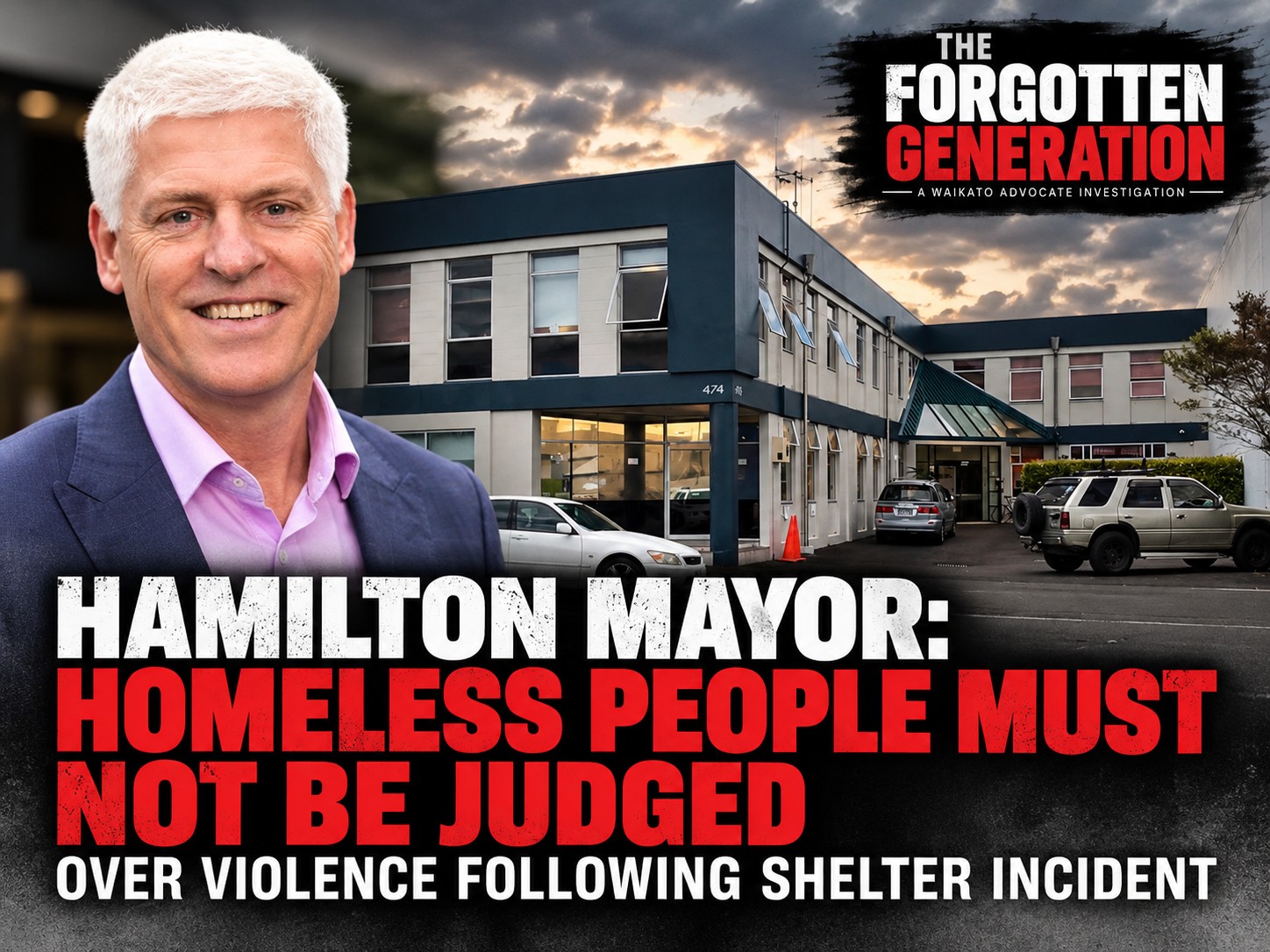
Hamilton Mayor Tim Macindoe has warned against linking homelessness with criminal behaviour following a violent incident near the city’s homeless night shelter that left a man critically injured.
In a statement to The Waikato Advocate, Macindoe acknowledged significant homelessness and disturbing antisocial behaviour in Hamilton, but stressed that the two issues must not be confused.
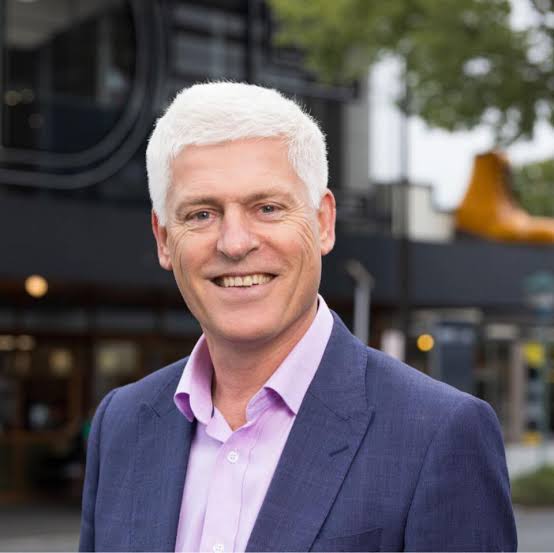
“Those experiencing homelessness (or working to provide services and support to them) should not be unfairly judged by the actions of a small minority,” he said.
His comments follow a serious incident on Anglesea Street earlier this month, which prompted criminal charges against a 27-year-old man and renewed concerns about safety in the central city.
Police were called to Anglesea Street, near Te Whare Korowai Hamilton Christian Night Shelter, at approximately 2.45pm on Friday, 2 October.
A man was found critically injured and transported to hospital, while another man was taken into custody.
As previously reported by The Waikato Advocate, citing RNZ, Cordey Clarke, 27, appeared in Hamilton District Court on 5 October charged with wounding with intent to cause grievous bodily harm, common assault and threatening to kill.
The charges relate to three alleged victims, only one of whom was previously known to Clarke.
Community Magistrate Brenda Midson refused bail, and Clarke was remanded in custody without entering a plea. His next court appearance was scheduled for 28 October.
Read our earlier coverage: Bail denied for man charged over Hamilton shelter incident
Macindoe confirmed he had brought together Police, government agencies, community organisations, service providers and businesses following the Anglesea Street incident.
The discussions were intended to support a coordinated response and identify longer-term solutions.
He said businesses, workers, residents, visitors and the street community all deserved to feel safe.
He said businesses, workers, residents, visitors and the street community all deserved to feel safe.
However, the Mayor emphasised that homelessness was a complex social challenge involving interconnected factors, including mental health, addiction and access to appropriate accommodation.
“While these issues are often linked in public discussion, they are distinct challenges that often require different responses.”
Macindoe said Council supported effective law enforcement while recognising that vulnerable people needed access to appropriate services and trained professionals.
The Mayor’s comments come as The Waikato Advocate continues its Forgotten Generation Project, investigating homelessness and housing insecurity across the Waikato.
In an investigation published on 10 October, a Waikato mother revealed how her 39-year-old son spent nine months homeless, including four weeks sleeping beneath a bridge with grass and sticks for bedding.
He searched rubbish bins for food and, according to his mother, encountered frightening situations while sleeping rough.
Another family described living in a vehicle rather than accepting accommodation it feared could jeopardise a vulnerable family member’s recovery from addiction.
The investigation also revealed that the Ministry for Cities, Environment, Regions and Transport acknowledged the social housing system was not working effectively enough for the people it was designed to support.
Government figures supplied to The Waikato Advocate showed 1,461 people on the Waikato Social Housing Register in August 2026, despite an increase in social housing stock across the region.
Interactive
Emergency housing
0recipients
Detail +
Recipients of Emergency Housing Grants recorded in the Waikato MSD region in August 2026.
Transitional housing
0places
78 more than November 2023
Detail +
Contracted transitional housing places in the Waikato — 78 more than November 2023.
Source: MCERT and MSD figures supplied to The Waikato Advocate for its 10 October 2026 investigation. Emergency housing: 120 grant recipients in the Waikato MSD region in August 2026. Transitional housing: 609 contracted places, 78 more than November 2023. These measure different things and are not a total count of homeless people. Transitional places are not permanent homes. Figures have not been independently reconciled against the underlying datasets.
Read our investigation: He Slept Under a Bridge for Four Weeks
Macindoe acknowledged that responsibility for housing, public safety, health and social services largely rested with central government.
Nevertheless, he said Hamilton City Council had a responsibility to bring organisations together and advocate for the community.
“I believe Council has an important leadership role to play in bringing people together, advocating for our community and supporting a coordinated response to issues that impact our city.”
The Mayor’s comments highlight the challenge facing Hamilton: responding to serious violence and public safety concerns while ensuring people experiencing homelessness are not collectively blamed or pushed further from the services they need.
“Ultimately, I want Hamilton to be a safe, welcoming and inclusive city for all, while ensuring vulnerable people are connected with the support and services they need.”
The Forgotten Generation Project is an ongoing investigative series by The Waikato Advocate examining homelessness, housing insecurity and the challenges facing vulnerable people across the Waikato.
Have a story tip or spotted an error? Contact the newsroom.
11 October 2026 · 7 min read
10 October 2026 · 8 min read
8 October 2026 · 1 min read